Grupotec consolidates scientific results from R&D&I applied to photovoltaic engineering in 2025
26 December 2025
The drive towards decarbonising the global economy continues to cement photovoltaics as a key component of the energy transition. Against this backdrop, in 2025 Grupotec reinforces its commitment to innovation applied to real-world projects with the publication of three scientific articles in leading international journals, stemming from its two industrial PhD programmes. These studies reinforce the company’s role as a leader in the modelling of photovoltaic plants and design on complex terrain, providing tools that help to reduce key technical uncertainties in large-scale plants and to improve design, operation and risk management throughout their entire lifespan.
These advances are being developed within the framework of R&D&I projects supported by ERDF funding via the Valencian Agency for Innovation (AVI), which promote knowledge transfer between universities and industry, with a direct impact on the sector’s competitiveness.
Photovoltaic field modelling
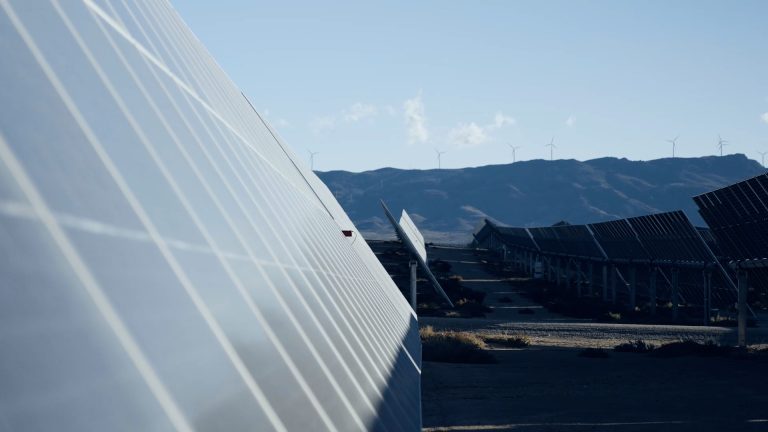
Over the past year, two studies examining in depth the electrical behaviour of photovoltaic modules and strings under real-world and extreme conditions have enabled Grupotec to significantly improve its existing software for predicting voltages and associated risks through its own in-house developments. These advances allow Grupotec to stand out in a highly competitive market.
The first study, *The novel evaluation method for PV module temperature and string size risk in utility-scale solar projects*, evaluates the most commonly used models for module string temperature and size, utilising real-world data from large-scale photovoltaic plants. Based on these analyses, the “Grupotec String Evaluation” model has been developed. This model provides an innovative way of quantifying the risk associated with the sizing of these photovoltaic module strings, improving the estimation of voltages throughout the plant’s service life and, in practice, reducing uncertainty in voltage calculations under real operating conditions. This facilitates regulatory compliance and the optimal selection of configurations for strings and inverters.
The second article, ‘Towards More Sustainable Photovoltaic Systems: Enhanced Open-Circuit Voltage Prediction with a New Extreme Meteorological Year Model’, introduces the Extreme Meteorological Year (EMY) model, which uses historical voltage percentiles to represent extreme situations more realistically over decades of operation. This is an important piece of work, as the article itself analyses how the choice of reference meteorological year impacts the estimation of peak voltages in high-power photovoltaic systems. Thanks to this method, more robust and sustainable design criteria are obtained, avoiding oversizing and improving operational risk management.
Topography and civil engineering modelling
Grupotec’s other industrial PhD project focuses on the impact of complex terrain topography, the design of the plant’s civil engineering works and its final energy yield. Over the past year, progress has been made in quantifying the impact of slopes, elevation differences and earthworks on the performance of bifacial systems (i.e. those with photovoltaic cells on both sides of the modules) and losses due to mismatch (known technically as ‘mismatch’).
Notable among these advances is the development of proprietary software that enables the definition of more efficient civil engineering design strategies and the assessment of the impact of topography on electricity generation through various methods. These tools allow for the comparison of design alternatives across different topographical scenarios, integrating technical, economic and environmental criteria.
The study ‘Optimal pyranometer placement in bifacial PV plants on complex terrain’ analyses the optimal placement of pyranometers on complex terrain to capture more representative irradiance data. The findings improve the accuracy of bifacial generation models and optimise the design of monitoring systems, which are key to ensuring the long-term performance of the plants. This reinforces the design of monitoring systems that support Grupotec’s plants throughout their operational life, improving control and the early detection of performance deviations.
Validated and applied innovation
The international publication of these three papers scientifically validates the methodologies developed by Grupotec and its academic partners, placing the company at the forefront of the design, modelling and control of large-scale photovoltaic plants. With the support of the AVI and ERDF funding, Grupotec continues to transform academic knowledge into practical solutions for safer, more efficient and more sustainable photovoltaics.